Mast Bend
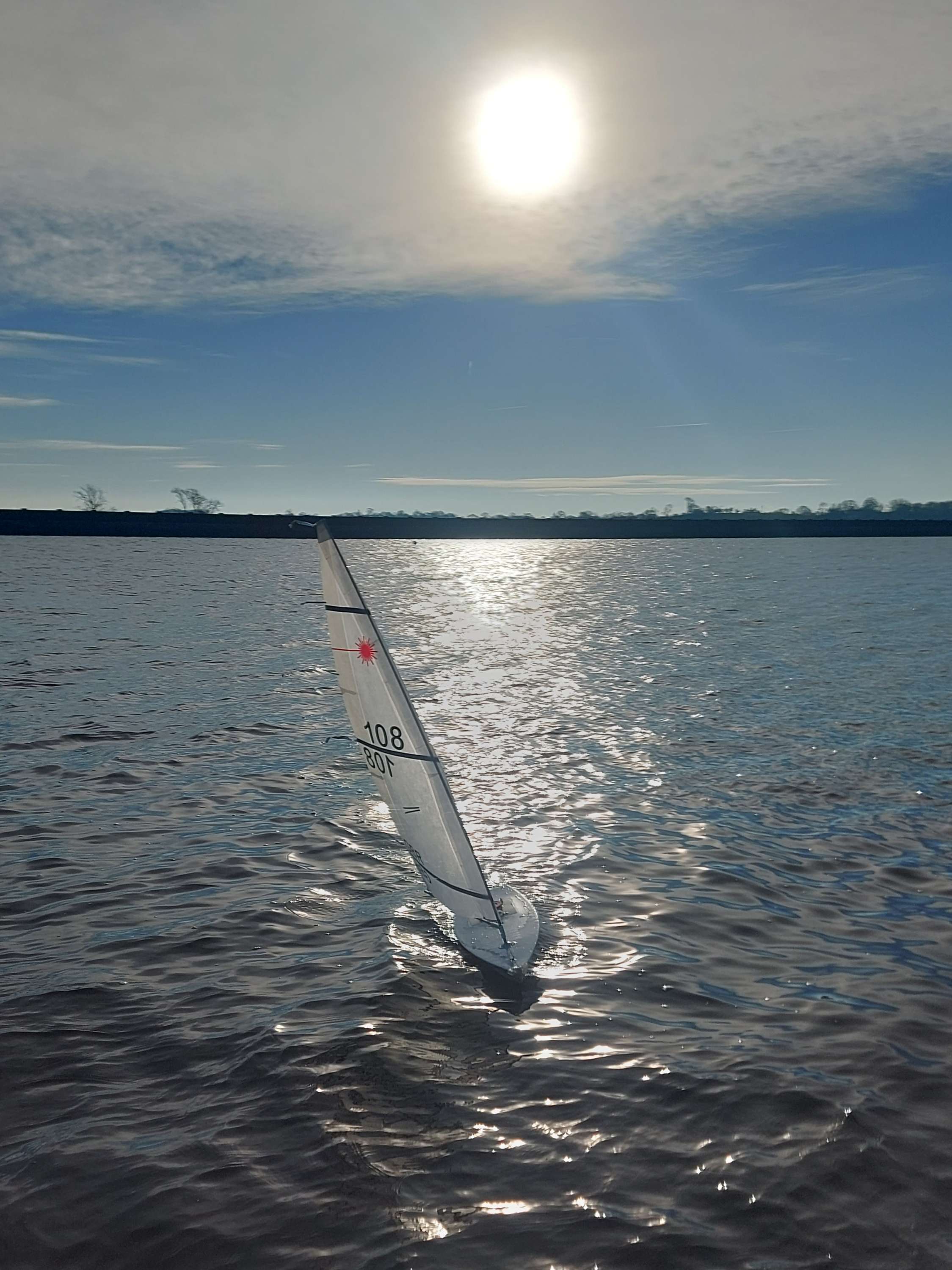
We need to be able to control mast bend so that we can shape the sail for upwind sailing in different wind strengths. We do this by changing the tension in the sail (by moving the inner outhaul slider towards mast for more mast bend and vice versa). In a stayed rigged boat with a backstay, mast bend is controlled by changing the tension in the backstay. This means that the fore and aft bend in the mast remains fore and aft whatever position the sail is in. In the RC Laser we do not have a backstay to hold mast bend constantly in the fore and aft direction. Wind pressure on the sail is able therefore to bend the mast forward when running downwind. This is exactly the same on the full size Laser. Take a look at any photograph of a full size Laser on a broad reach, or a run, in heavy weather and you see the mast bending with the wind.
There is an upside for us compared to a rig with backstay. On the stayed boat mast bend is only correct for one position of the sail and this is usually for the close hauled leg. When the sail is, say, out at 60 degrees to the boat; ie. a broad reach, the mast, as seen by the sail, is nearly straight – not what we had in mind when we set backstay tension. Whereas on our Laser the mast bend remains more or less as we want at most points of sailing because the mast bending force moves around with the sail.
Comments